Wednesday, October 13, 2010

Living in a Yurt


Recently people have been asking me a lot of questions about life in a yurt. What's it like? they ask. Do you miss living in a house? My answer thus far is well, No. Life in a yurt is beautiful, it's simple, it's elegant.

Like other people we study, work, and even throw the occasional dinner party. The simplicity of our home does not deter us from having guests, lighting candles, nor entertaining. In fact, we almost like it more.
We dine inside an example of alternative living. A manifestation of the idea that there are ways that your life can be simultaneously lower-impact and beautiful to boot.

Monday, September 27, 2010

Pictures of the homestead (in process)

I've had several requests from readers to see more visuals of our homestead in process. Here I oblige.
Our yet unfinished bathhouse, a recycled greenhouse and it's former foundation, complete with composting toilet, clawfoot bathtub (run with on-demand hot water heater and grey water system)...

... both yurts and the bathhouse with our dahlias in front and avocados to the left.


.... and a recent flower harvest.

Tuesday, August 10, 2010

Our Modern (peri-urban) Homestead


I'll admit it, when I thought, ' yes, we're going to build our own home this summer,' I had no idea what I was getting into. I suppose that I believed that building my own home out of recycled material would be easy, that it would take a few weeks, perhaps a month, that it would be stressful, but not too taxing. I assumed that my partner had done it before and would be able to guide me seamlessly through the project. And, I admit it here in plain text;
I was wrong.

I think that growing up with parents who are architects, contractors, and interior designers set me up for inevitable disappointment in any type of housing project, much less building my own structures. Pretty obvious I'd imagine to the casual observer, that I have high expectations for form, function, and feasibility in my housing. However, I had no idea how hard this would be, or how long it would take to build, plumb, and electrify two yurts and a bathhouse. Imagine if I was actually trying to build a real house! Wow.

So here we are, several months into working on our structures. We have running water and electricity, a fully functioning kitchen. Our grey water systems need attention, but we can heat water and chill food- both which feel luxurious. We are half done with a bathhouse, planning on building the roof and putting in the floor this afternoon, our tub with instant hot water and our composting toilet are not far off. I am dreaming of bubble baths... but I digress.

In moments of true stress, my partner and I look at each other and laugh- how did the original homesteaders, my great great greats who came across the plains to 'settle' the Central Valley do it? No power tools, no hardware store, no craigslist. Not to mention having animals to care for, and children to feed. I realize that what we are doing today is mere child's play, so padded by the comfortability of our surroundings, the ability to take a lunch break and grab a ready made organic burrito down the street- that my duress is laughable.


So we ride the paradox. Feeling my very real stress as we finish our bathroom, and electrify our office. All the while acknowledging that our daily questions (which hose connection for the sink) are not matters of life or death. They are instead the very soft learning curve of a modern (peri-urban) homestead.


Thursday, July 15, 2010

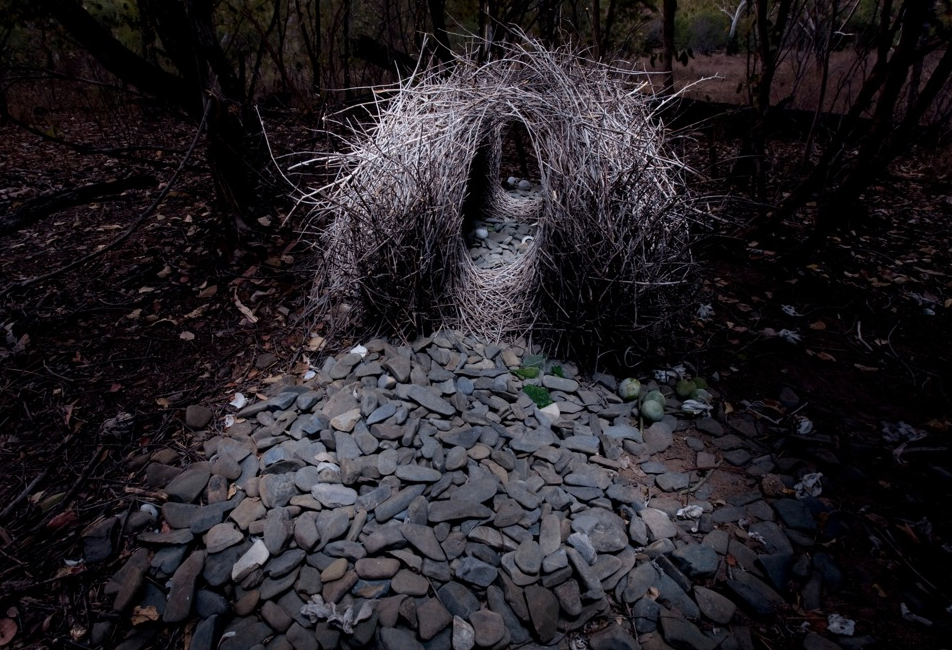
Decorating Bird

A friend sent me this in reference to my recent yurt decorating frenzy. I had to share the photo, follow the link to read more about the Bower Bird- an actual avifauna who builds these nests unaided.

Monday, July 12, 2010

CFL: Not a bright idea


I have a bone to pick with Al Gore. Yes, I saw his movie, yes I was scared, yes I've been doing my part to solve climate change every since. Just like any other green tinged American I took his number one advice, and began to use compact fluorescent (CFL) bulbs in my home. Until now.

Last Friday, I was unscrewing one of those modern looking twisty CFL lightbulbs when it did what many lightbulbs have done before. It broke. In my hand. Over my head. It was at this point that some distant memory of a news story flashed through my brain- mercury my brain murmured to me. Mercury, I thought as I stopped breathing, doing my best to hold my breath until I could exit the room.

My news savvy instincts proved correct and sure enough, and after a quick Google search- mercury was all I thought of for days. You see, those new CFL lightbulbs Al and his climate friendly buddies are pushing onto the public have vaporized mercury suspended within them, and when the bulbs break these odorless colorless invisible droplets of heavy metal burst into the environment and settle, tainting whatever they land on. Now picture me with my hand holding the lightbulb- over my head.

I wanted to share a few cheery highlights I found from the EPA website entitled "Cleaning Up A Broken CFL" http://www.epa.gov/cfl/cflcleanup.html.

#1 Open a window and leave the room for 15 minutes or more. Shut off the central forced-air heating/air conditioning system, if you have one.
# 2 Have people and pets leave the room, and don't let anyone walk through the breakage area on their way out.
# 3 If clothing or bedding materials come in direct contact with broken glass or mercury-containing powder from inside the bulb that may stick to the fabric, the clothing or bedding should be thrown away. Do not wash such clothing or bedding because mercury fragments in the clothing may contaminate the machine and/or pollute sewage.

Now, if these tidbits aren't a sell on why you should keep CFLs near your women and children, I don't know what is! I realized as I read this website, that in my choosing to use CFL lightbulbs, I purposely put myself in harms way. Sure, CFL lightbulbs are better for climate change, but what about my unborn children? Mercury, like other heavy metals, is stored in your fatty tissue- and never, that's right never goes away. Aside from the gore of mercury poisoning after sufficient accumulation, there is also the possibility of serious birth defects due to high amounts of mercury in the mother's body.

So, Al, were you weighing the possibility that someday, one of those lightbulbs might break? Or, more practically, that many of them would indeed break, putting millions of people at serious risk in their own home? My major question is to you- why, when there are so many ways to save energy, would you push this one, dangerous alternative as the first thing people should do to stop climate change? Because of your advice, my partner and I spent the weekend calculating how to clean our space without further contaminating other areas. Because of your advice I threw out some of my favorite cloths that, when the bulb exploded in my hand, were irreparably laced with mercury. Because of your advice I now further worry that if I do choose to have kids (a hard enough choice in and of itself) they have a higher chance of a major birth defect due to my body's exposure to mercury.

Al, I will never buy another CFL until there is nothing to fear about them except the minor chance of some innocuous broken glass. Until that day, I'm going to fight climate change the old fashion- by simply turning my lights off more often.

Friday, July 9, 2010

The ladies are back.


Our Dahlias are back... and their too flamboyant not to share!

Thursday, July 8, 2010

A Femivore's Future

In two recent conversations I've had with women I consider my elders- people who've been around the block, seen it all, a common theme is emerging. It usually begins with the benign question- So how about you and you're future? What is next, post grad school? This question would have been all well and good a few years ago, when the footloose young twenty-something version of myself would answer confidently- career- of course.

However, something recently has changed. There's a softer edge in my voice. Perhaps it's all of this writing and thinking I've done about how the personal is political, how the individual choices that we make in our lives can affect change as in the case with activism or advocacy. Perhaps it's hormones, growing older, the awareness that at some point I may have to decide if children and family are in my future.

In one of the conversations, my friend was sure that the first wave feminist ideal that women can do everything, be super-moms, have amazing careers and be mothers too- was baloney. She was convinced that her generation had attempted to make that dream a reality and they had ended up with careers that fell short of glass ceilings, and children that had learning disabilities and resented their parents for not spending enough time with them. I've since heard this sentiment echoed from other women of the same generation.

I feel this question is my femivores dilemma. To be a feminist and a food activist. To be someone who truly values the assets the women bring into the world as mothers and home-makers, and who craves to embody many of those qualities. And on the other hand to be someone who has climbed the ladder high enough to know I can affect real change in the world if I'm willing to lend the cause my time.

I've decided that there should be a fourth place in this debate- not pigeon holing women into categories: (those who play traditional feminine roles, those who choose career, or those who attempt career and children) by creating new opportunities instead of forcing women to choose between several flawed paradigms. What about changing the expectations for women who choose to have kids, like honoring child rearing as a skill building activity- not hole in their resume? What about creating the social agreement that co-parenting should be the norm? What about a social safety net that supports working families? We have to reverse the rhetoric, the pressure that's put on women that have to 'choose' between one sad choice and the next.

In short, I didn't have, nor do I have an answer to their question. I do believe however, that my generation will create the answer.

Friday, May 14, 2010

Localization

I'm ready for localization to be the word on everyone's lips.
I've tired of the constant analysis of globalization.
Of the analysis that global is 'in'.
I am ready for people to start buying, and participating and focusing on the local, their local, their lo-cal call to action.
Localization will be the wave of the future. From farmers markets and CSAs to Slow Money reinvestments in communities.

When I googled Localization today, Wikipedia told me the word was associated with high tech, with the locality of figments of cyberspace. Hubs of imagined spacial dimensions.
I laughed.

I imagine a world where cyberspace will not be as important as physical locations. Locations of personal interaction, of commerce, of relationship.
I imagine one day, localization be in.

Thursday, May 13, 2010

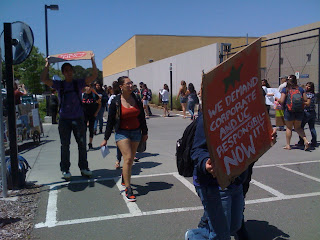
UCD Students Stand Up: Immokalee and Arizona


Students at UCD have have been standing up to racism and slavery of late holding multiple rallies over the last week. Students gathered to demonstrate on campus regarding both the recent passage of legislation in Arizona condoning racial profiling of immigrants, as well as an ongoing labor dispute in Immokolee, Florida, where tomato pickers have joined forces with college campus nationally to urge corporations to pay one cent more per pound for their tomatoes, passing that additional cent directly to the worker.


It was good to see so many UC Davis students out this week, organizing and speaking out in support of social justice.

Tuesday, May 11, 2010

True Community Supported Agriculture


I'm currently part of a group of researchers here at UCD that's doing a study on CSAs, Community Supported Agriculture programs on farms here in the Central Valley of California. CSAs, for those of you unfamiliar with the concept, are subscription contracts between community members and farmers, basically consumers pay up front for goods (which can be produce, meat, eggs, dairy, processed farm goods) and the farmer, or CSA manager grows or procures that product and gives the consumer a weekly or bi-monthy portion of that product for a season. Now, as I'm learning doing this research, there are a lot of ways to run a CSA. Large and small, communities and farms are redefining the meaning of the traditional CSA.

As I've been driving to and fro in the Valley, hearing the trials and tribulations of farmer after farmer, I've been thinking-- what would true community support for agriculture look like. I'm not talking about the CSA- which, don't get me wrong, is revolutionary, definitely an exceptional way to turn traditional capitalist relationships of consumers and producers on it's head -- I'm talking beyond the CSA. What can whole communities- not just well meaning individuals in a community-- but entire municipalities, states, and dare I say- the feds, do to support agriculture.

Much of this thinking has been prompted by my Masters program in Community Development, witnessing the tangible ways that communities choose to support education, housing, healthcare-- why not agriculture? Again and again I speak to farmers who are struggling, who, despite their creativity, wit, and sheer physical force feel like they are fighting a loosing battle. In the midst of the most expansive time in the public history of alternative food systems, they feel unsupported.

I don't pretend to have the answer yet. My thinking lately has been towards securing land tenure for farms, renewing the Williamson Act (at least in California), increasing market access for beginning farmers, and increasing the willingness of the public to pay the true cost of food-- but I know there must be other more pragmatic ways that communities can truly support agriculture.